
Blue Schools
Educating about the sea means educating for the future. European Blue Schools bring the sea and the ocean into the classroom through concrete projects developed together with students and teachers.
The initiative is part of the Network of European Blue Schools – NEBS, promoted by the European Commission, supported by DG MARE and part of the EU4Ocean Coalition for Ocean Literacy.
The objective is to develop Ocean Literacy: understanding how the sea and the ocean influence our lives and how our actions influence the sea and the ocean.
A school does not necessarily need to be located on the coast to become a European Blue School: every school can start from its own territory, its own subjects and the connections that link everyday life to the ocean. The Network is open to schools throughout the European Union.
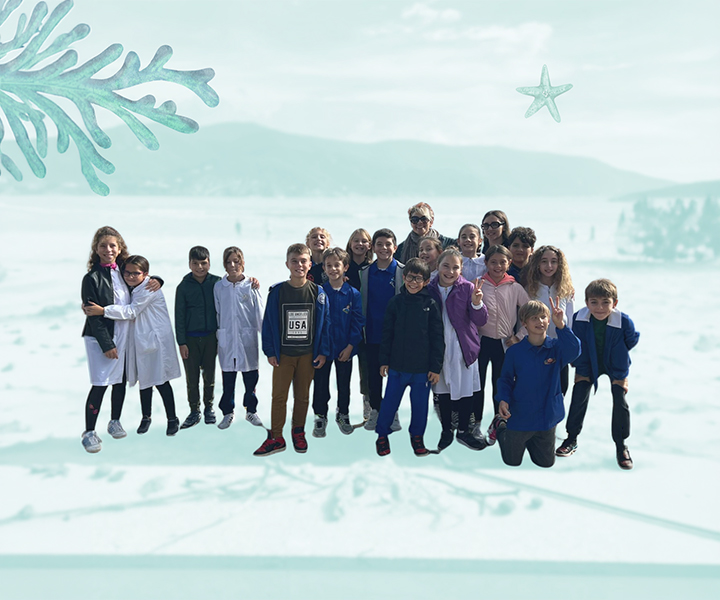
What does it mean to be a Blue School?
Each school develops its own project dedicated to the sea and the ocean, actively involving students and teachers. Projects may focus, for example, on:
- science education and environmental monitoring;
- citizen science;
- art, storytelling and creative expression;
- biodiversity and ecosystems;
- climate change;
- maritime culture and traditions;
- the blue economy and ocean-related professions;
- community engagement and collaboration with local organisations.
Through these pathways, the sea becomes a concrete opportunity for interdisciplinary learning, participation and active citizenship.
Schools whose projects meet the criteria established by the Network can obtain European Blue School certification and become part of NEBS, joining a European community of schools, teachers and students committed to Ocean Literacy.
The path developer so far
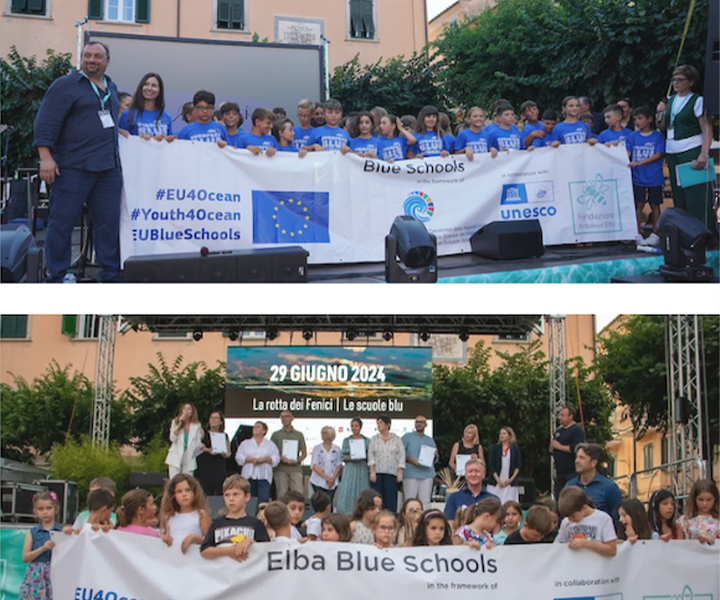
Fondazione Acqua dell’Elba began working on the European Blue Schools in the 2023–2024 school year, supporting the schools of Elba Island throughout the certification process.
In June 2024, Elba became the first European territorial unit in which all school institutions obtained European Blue School certification. The programme was developed by the Foundation with the scientific support of the Tuscan Archipelago National Park.
In the following school year, the project was extended to the other islands of the Tuscan Archipelago, also involving the schools of Capraia and Giglio Island.
In November 2025, Fondazione Acqua dell’Elba, the Tuscan Archipelago National Park and ANCIM – National Association of Italian Small Island Municipalities also launched a collaboration aimed at promoting the Blue Schools model across Italy’s smaller islands.
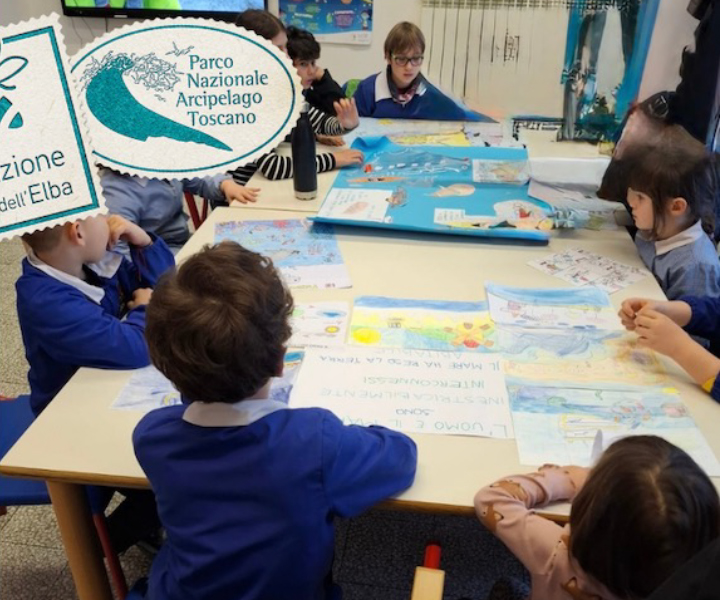

Blue Schools in Italy
In recent years, both the number of certified European Blue Schools and the number of local initiatives dedicated to Ocean Literacy have grown in Italy.
The Foundation’s work is therefore progressively opening up to dialogue and collaboration with schools, teachers, institutions, museums, associations and other organisations that, in different parts of Italy, share the same objectives.
The aim is to connect these experiences, share tools and good practices, and help new schools approach the European programme, in line with the framework and procedures established by the Network of European Blue Schools.
At international level, NEBS is also connected to the Blue School Global Network – BSGN, coordinated by UNESCO-IOC, within which the Network of European Blue Schools represents the European regional dimension.
Join the network!
Does your school already have a project dedicated to the sea or the ocean? Would you like to understand how to develop one and what the requirements are for obtaining European Blue School certification? Fill in the form: we will contact you to introduce the programme, understand where to start and identify the next steps together.

For further information
Curious to find out more about the ‘Blue Schools’ project and the initiatives carried out so far by schools in the Italian network over the last few years? Here are some useful links and documents: